OCR for prevention documents: separating data extraction from validation

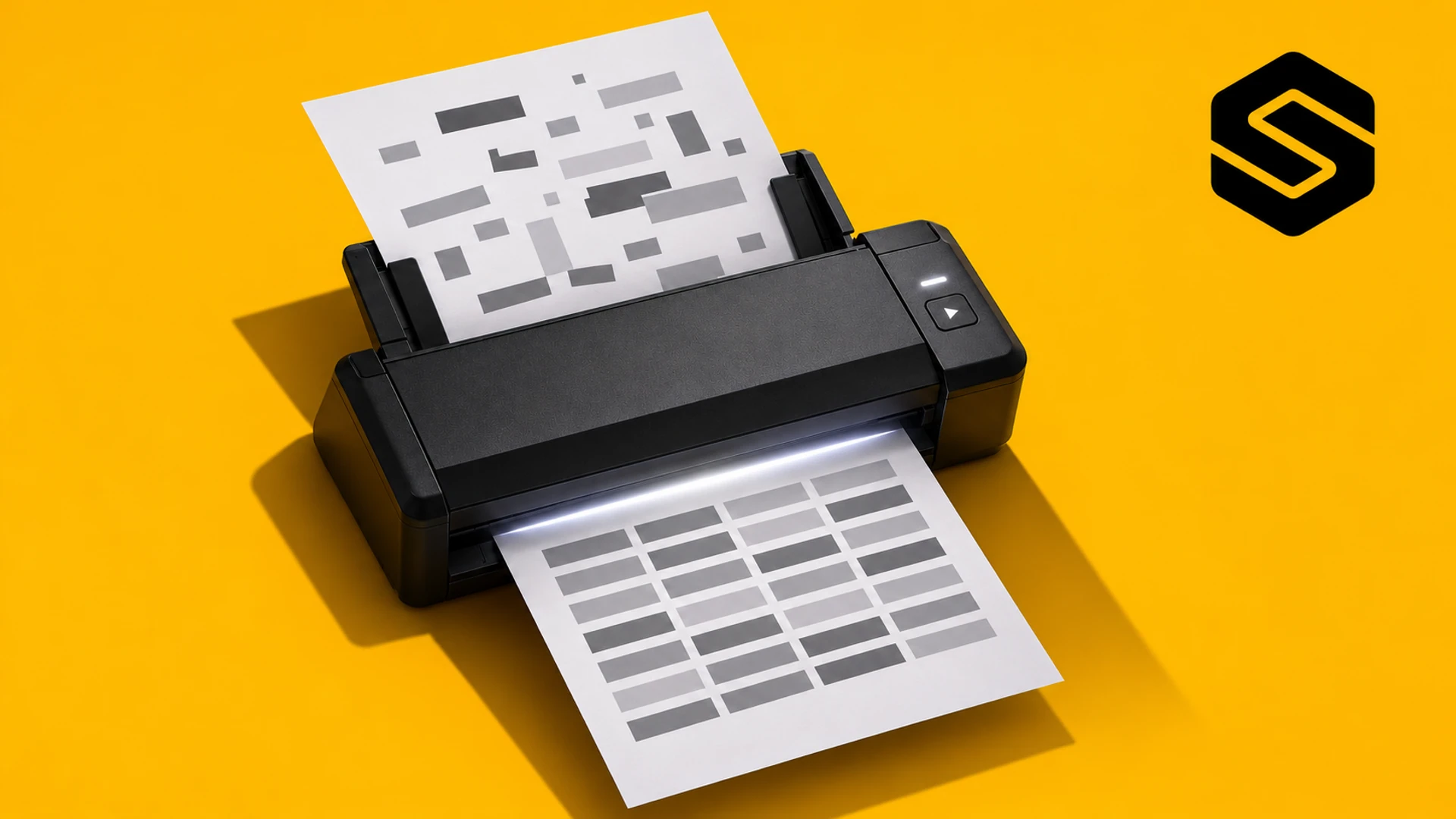
OCR can turn a date or name in an occupational prevention document into searchable data. It does not, by itself, determine whether the document satisfies the preventive requirement under review. Reading “12/03/2027” correctly and deciding that a certificate remains valid are different decisions. The second needs context and justified rules.
In Spain, PRL documentation supports occupational risk prevention. Assess required prevention records according to their purpose. Before automating extraction, define the expected document, the person or company it belongs to and the decision each extracted field may support. A collection of recognised fields is not the same as a reviewed file.
Keep three layers separate
The first layer is reading characters. The second is interpretation: deciding whether a date means issue, completion, review or expiry. The third is checking the requirement: establishing whether the content is suitable for the activity, site and period concerned. Separating these layers makes the cause of an error easier to locate.
Microsoft’s technical guidance on confidence and accuracy describes using scores to guide human review. High confidence in extracted text does not demonstrate authenticity or preventive adequacy. There is also no single threshold suitable for every field and consequence.
Design an exception review process
- Classify before extracting. Separate certificates, instructions, minutes and other records. When document type is uncertain, avoid applying rules intended for another category.
- Retain the source. Keep the file and page reference that allow the field to be checked. Do not silently replace the original with recognised text.
- Match identities. Compare identifiers with the destination record. A similar name is not sufficient to assign a document to a person.
- Use explicit rules. Define date formats, mandatory fields and cross-checks. A future date may describe a planned review rather than expiry.
- Review and record. Assign uncertain cases, display the source beside the extracted value and retain the original value, correction, reason and reviewer.
This process supports OSH data quality. Where personal data is involved, the accuracy principle in the GDPR provides another reason to correct errors. Appropriate permissions and a proportionate choice of fields should accompany the workflow.
A useful pilot checklist
- Include authorised real documents or anonymised samples with varied layouts, rotated pages and poor scans.
- Measure reading, classification and assignment errors separately rather than reporting one overall success figure.
- Check false positives: files accepted despite incorrect or insufficient information.
- Review a sample of apparently correct cases as well as those that generate alerts.
- Record the effect of changes to the model or validation rules, and repeat relevant checks after updates.
Illustrative example: the right date in the wrong field
A certificate contains a course date and an issue date. OCR reads both correctly, but the workflow treats the issue date as the completion date. The error concerns meaning rather than character recognition. Scanning the same page again will not fix it.
The reviewer compares the image, corrects the assignment and records the reason. Other files using the same layout are then checked for the same problem. This is more useful than correcting one record while leaving the underlying rule unchanged.
A further check concerns language and date conventions. A document received from another country may use a different day and month order. The workflow should flag ambiguity rather than choosing an interpretation that happens to fit the expected deadline.
Bulk validation of contractor documentation addresses another stage of the process. Where a document has an electronic signature, signature verification and evidence retention require their own checks, independently of whether the text is readable.
Frequently asked questions
Does OCR detect forged documents?
Do not assume that it does. Text recognition does not establish authenticity. Issuer, integrity and signature checks need appropriate mechanisms and review criteria.
Does every document have an expiry date?
No. Distinguish document validity, the scope of its contents and a review interval set for the process. Do not invent an expiry date without a justified basis.
What should a software evaluation include?
Test samples with known errors and ask how corrections are recorded. Bring those samples to a discussion of Sabentis prevention software to establish the available workflow.