Work at heights in Colombia: what Resolution 4272 of 2021 requires, training, permits, PPE and the fall protection programme

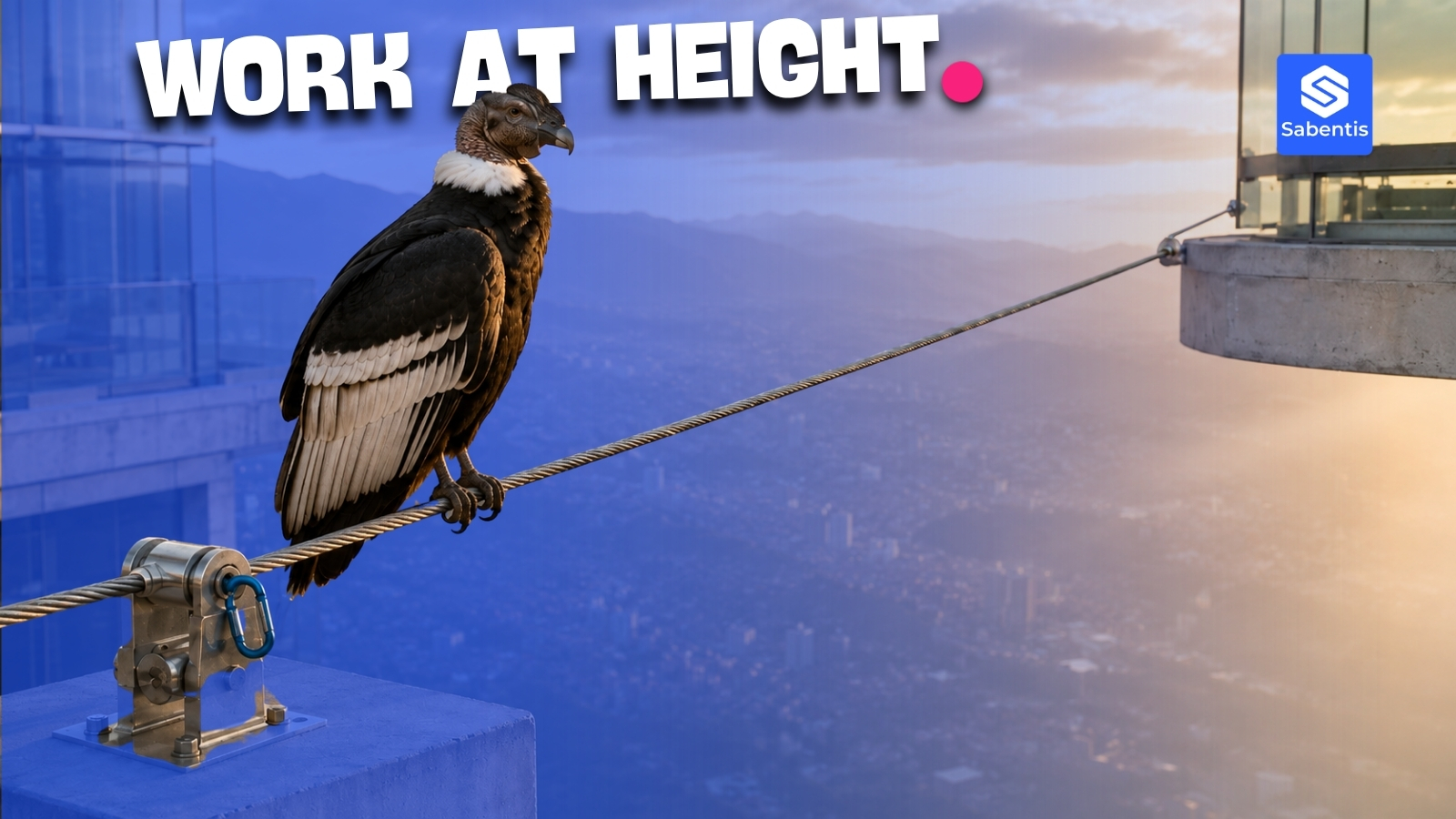
Resolution 4272 of 2021 of Colombia’s Ministry of Labour treats work at heights as a critical task because an accident may have serious or fatal consequences. It replaced Resolution 1409 of 2012 and sets the minimum safety and training requirements for work at heights. This guide summarises what it requires and how to manage it from the SG-SST.
What counts as work at heights
The Resolution defines work at heights as any activity that causes a worker to be suspended or displaced and exposes the worker to a fall risk greater than 2.0 metres, measured from the plane of the worker’s feet to the nearest lower horizontal plane. Where dangerous conditions exist, prevention and protection measures must also be ensured below that height, but this does not change the legal definition. It applies to employers, contracting parties, contractors, independent workers and training providers.
The fall prevention and protection programme
It is the central document, integrated into the SG-SST, and must include:
- Identification of tasks at height, hazards and risk assessment.
- Prevention measures: engineering systems, collective measures (guardrails, demarcation), signage and safe work procedures.
- Protection measures: fall arrest systems, certified anchor points, lifelines and fall protection PPE (harness, lanyards, connectors).
- A work-at-heights permit and a pre-task checklist.
- A rescue plan with trained staff and equipment available on site.
- Training, retraining and medical fitness of workers.
- Inspection, maintenance and equipment logs.
Training and certification: levels and retraining
Resolution 4272 of 2021 organises training by role, with differentiated minimum durations: area manager, 8 hours; authorised worker, 32 hours; work-at-heights coordinator, 80 hours; trainer, 130 hours. Programmes for area managers, authorised workers and coordinators may be provided by the provider categories listed in Article 11, registered with the Ministry of Labour and using trainers who meet the required profile; the certificate is issued by the authorised provider, not by an individual trainer in a personal capacity. Retraining for an authorised worker is required on joining a company or project, when conditions, the activity, procedures, technology, equipment or processes change, and as an update after 18 months with the same company and activity; it lasts at least 8 hours, with 20% theory and 80% practical training, and immediate retraining is required where failures in prevention or protection measures are detected. The worker must also hold a medical fitness certificate for work at heights, at the frequency set by the occupational physician.
Work permit and supervision
The permit procedure must be applied before work starts. The permit may be completed by the workers or the employer and must be reviewed and signed by the coordinator for each event; it must cover, among other matters, fitness, protection systems, environmental conditions and the person responsible for activating the emergency plan. The plan must provide rescue equipment and trained emergency or other personnel, and a support person must be available to the worker. The permit is closed when the task ends and kept as evidence.
Fall protection PPE
Full-body harness, shock-absorbing or positioning lanyards, connectors, helmet with chin strap and lifeline certified under recognised technical standards. Each item must have a log, a pre-use inspection, a periodic inspection by a competent person and withdrawal after a fall or at the end of its service life.
Common inspection findings
- Work-at-heights certificates that are no longer valid or were issued by unregistered providers or providers outside the required category.
- Generic work permits without the coordinator’s signature or a checklist.
- Uncertified or improvised anchor points.
- A rescue plan on paper without equipment or staff on site.
- Contractors working at height without document control by the contracting party.
How Sabentis helps
Sabentis manages the full cycle: tasks at height in the hazard matrix, work permits and safety inspections from a mobile device, training and certificates with retraining alerts, medical fitness in health surveillance, PPE logs and contractor control, all traceable for the Ministry of Labour and the ARL. Explore the safety, health and well-being modules and the organisational management and planning modules.
Frequently asked questions
How often must workers at height be retrained?
There is no general annual rule. Retraining is required on joining a company or project, when conditions, the activity, procedures, technology, equipment or processes change, and as an update after 18 months with the same company and activity; it lasts at least 8 hours, with 20% theory and 80% practical training.
Who can certify the training?
Authorised providers in the categories listed in Article 11 of Resolution 4272 of 2021, registered with the Ministry of Labour and using trainers who meet the applicable profile. The certificate is issued by the authorised provider, not by an individual trainer in a personal capacity.
Does it apply to work with portable ladders?
The same threshold applies: a fall risk greater than 2.0 metres. Below that height all identified risks must still be controlled, without changing the legal definition.
Related concepts in Sabentis Explora
Explore the key concepts behind this article in these Sabentis Explora reference cards, available in Spanish:
Sources
- Resolution 4272 of 2021, Ministry of Labour, minimum safety requirements for work at heights (Spanish).
- Decree 1072 of 2015 and Resolution 0312 of 2019.