Cultura 5Z at work: turning its five dimensions into an action plan

Cultura 5Z provides a broad framework for discussing how an organisation works and cares for people. Turning that discussion into change requires priorities, owners and follow-up criteria. An action plan connects general commitments with decisions that can be reviewed throughout the working year.
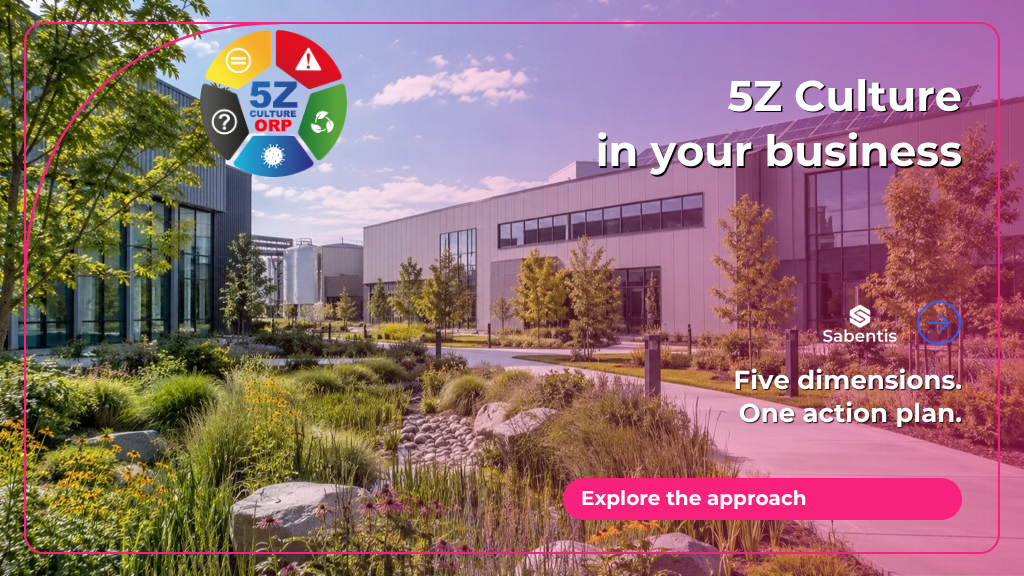
The Fundación Internacional ORP model has five dimensions: Zero Accidents, Zero Diseases, Zero Waste, Zero Inequality and Zero Lack of Knowledge. The Cultura 5Z entry in Sabentis Explora explains its background. The planning approach below is our own illustrative application, not the official scoring system for certification.
Establish a shared starting point
Bring together OSH, People, Operations and Sustainability owners, with representation from those performing the work. Identify available and missing information: assessments, observations, environmental data, training and participation experiences. Distinguish verified results from impressions and avoid filling information gaps with favourable assumptions or unsupported conclusions.
Choose an initial scope: one company, several sites or a specific process. Define a working period and identify who can approve resources. An initiative that attempts to cover everything without implementation capacity can accumulate unfinished activities. Each priority should have an owner able to make a specific decision.
Five dimensions, five management questions
Zero Accidents: which controls need attention?
Select a priority situation identified in the workplace. One example is reviewing separation between pedestrians and mobile equipment. Assign technical assessment, implementation and verification. An indicator could track verified measures against those due for verification in the period, retaining their priority and context instead of treating every action as equivalent.
Zero Diseases: which exposures and conditions need improvement?
Start with assessed risks and available information about working conditions. An example is reviewing a physically demanding task and implementing changes identified by competent assessment. Follow-up should check changes to conditions and how those changes work. Health promotion activities also need a defined purpose rather than becoming isolated events.
Zero Waste: which environmental information supports decisions?
Identify a relevant material stream, its source and the owner of its data. As an exercise, analyse packaging waste from one process and define feasible action with the environmental team. Measure quantities using consistent units, periods and scope. Do not attribute a reduction to an intervention without considering changes in activity levels.
Zero Inequality: who can participate and gain access?
Review barriers in information, training and participation channels. An example activity is adapting access for people on different shifts or with different communication needs. Define how to check that the solution reaches the intended group. Listening to the affected people helps determine whether the change is useful in practice.
Zero Lack of Knowledge: what learning is needed?
Connect tasks with the knowledge and competence they require. One example is reviewing induction and checking that new starters can perform authorised activities with appropriate preparation. Record the learning need, how it will be supported and how its application will be reviewed. The Explora entry on OSH training develops this approach.
Connect activities without removing their differences
These five proposals can share a management structure: objective, starting position, activity, owner, date, resources, evidence and indicator. Each area retains its own methods and competent professionals. Environmental improvement and health assessment do not require identical data, access rights or technical checks.
Vision Zero’s seven Golden Rules can support leadership, organisation and participation. This is a practical relationship, not an assumption that each rule corresponds to one 5Z dimension. The Explora entry on safety leadership helps clarify how management participates in decisions and removes obstacles to implementation.
Review decisions as well as percentages
At each review, ask what changed, what evidence supports the result and what is preventing progress. Amend the plan while preserving reasons for decisions. Across several sites, explain differences and identify data that is not yet comparable. The guide to preventive indicators helps build useful follow-up rather than a dashboard detached from everyday work.
Software can support continuity between owners, activities and evidence. When exploring Sabentis OSH software, bring this plan and verify which processes the proposed solution covers. The aim is information that enables people to direct improvements, check their effects and sustain them in everyday operations.
A practical checklist for preparing a 5Z review
Before expanding the plan, check whether each dimension provides enough information for decisions. Use this checklist to prepare the meeting while retaining the distinctions between the different areas.
- Identify one information gap per dimension and assign an owner, without treating missing data as a positive result.
- Check that the same action is not counted several times as separate improvements in the overall assessment.
- Separate shared and dedicated resources to identify priorities competing for the same budget or team capacity.
- Review whether consultation includes shifts, sites and groups that participate less through the usual channels.
- Distinguish the plan’s internal objectives from any requirements used in a formal assessment for the 5Z label.
Frequently asked questions about a Cultura 5Z action plan
Does an internal plan entitle a company to claim the 5Z label?
No. An improvement plan and obtaining the label are different processes. An organisation wishing to describe itself as certified must complete the relevant process with the promoting organisation and respect its scope. Recording actions in software does not itself confer that recognition.
How should we start if data is missing for one dimension?
Record the limitation and organise initial data collection with a defined scope and owner. Other justified actions can proceed while this work is completed. Avoid automatically assigning a positive assessment or comparing that dimension with another that already has a reliable information base.
Can one action contribute to several dimensions?
Yes, provided that the expected effect in each dimension and the verification method are explained. Improved onboarding might support knowledge and participation, for example. Keep a shared action record with separate outcomes so that its contribution remains understandable without being counted multiple times.
Is Cultura 5Z legally compulsory in Spain or Colombia?
Cultura 5Z is a voluntary initiative of Fundación Internacional ORP. Its dimensions provide an improvement framework, but do not replace employment, environmental or equality obligations applicable to each organisation. The plan should identify those obligations separately and allocate their follow-up to competent people.
Sources and methodology
- Fundación Internacional ORP: Cultura 5Z: official model and recognition process covering its five dimensions.
- ISSA: Vision Zero resources: a complementary reference for leadership, organisation and participation; it establishes no mandatory correspondence with Cultura 5Z.
Sources consulted on 6 October 2026. Checklists and examples are practical implementation proposals.