Colmena Seguros visits the Barcelona Supercomputing Centre on a key day for innovation in occupational health
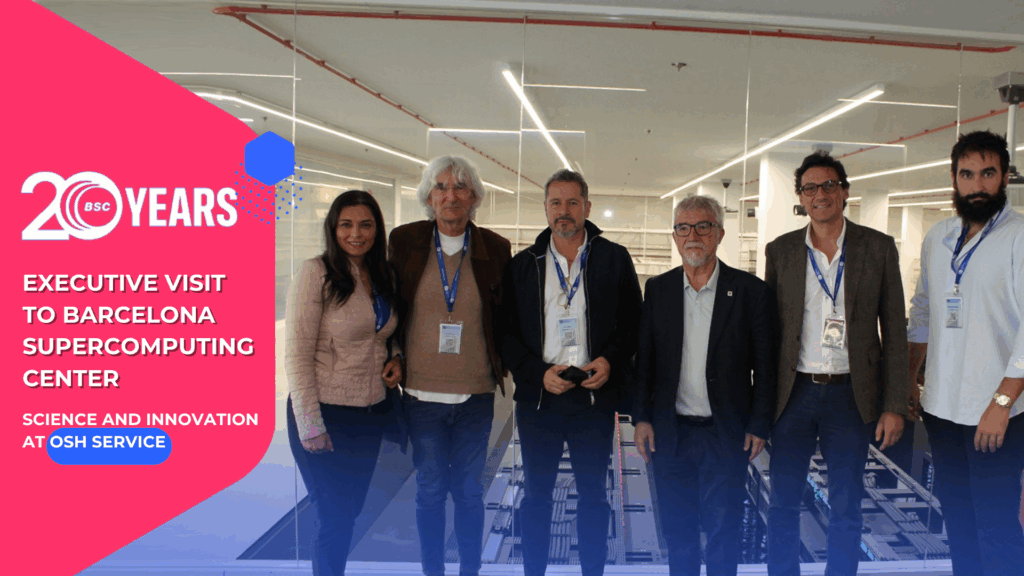
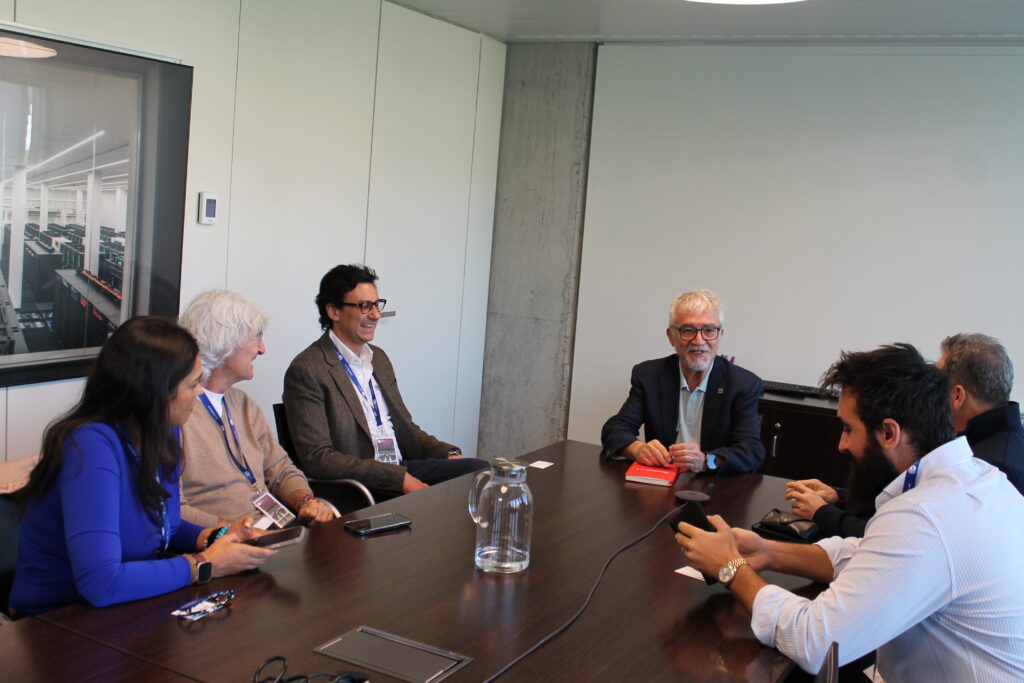
Barcelona, 6 October 2025 – On a strategic day for the future of occupational risk prevention, representatives from Colmena Seguros (Colombia), led by its President Andrés David Mendoza and Vice-President Rafael Genaro Herrera Ossa, visited the Barcelona Supercomputing Centre – National Supercomputing Centre (BSC-CNS). The delegation was received by the prestigious Dr. Mateo Valero, director of the centre and one of the most influential figures in the global field of supercomputing.
During the meeting, which was also attended by Prof. Pedro R. Mondelo (Polytechnic University of Catalonia), Mary Luz Piñeros (General Manager of Sabentis Colombia) and Pablo R. Nieto (Chief Financial Officer of the Sabentis holding company), the current and future challenges in big data management, artificial intelligence applied to occupational health and cutting-edge developments that can transform prevention in organisations were discussed.
Supercomputing at the service of workplace wellbeing
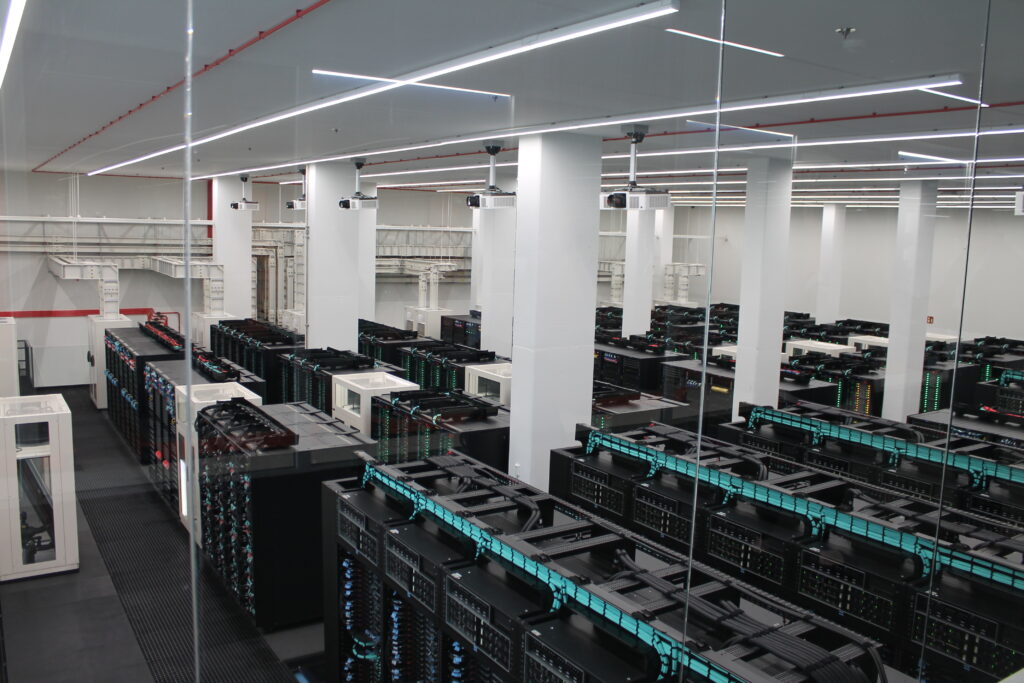
The Barcelona Supercomputing Centre – National Supercomputing Centre (BSC-CNS) is Spain’s leading supercomputing centre and one of the most advanced in the world.
Its true value lies in the real impact of its applications: from artificial intelligence and bioinformatics to personalised medicine, its developments are used in both academic research and industry to solve global problems. These applications increasingly draw on artificial intelligence for risk prevention.
At the helm of the centre is Dr. Mateo Valero, one of the most brilliant minds in the world of computing. He is considered a global authority on computer architecture—the discipline that designs how the most powerful computers on the planet think and process data.
He has been awarded the three most prestigious prizes in the world of supercomputing: the Eckert-Mauchly, the Seymour Cray and the Goode Award, the scientific equivalent of the Oscars, which are only given to those who have made a significant contribution to computing. He also holds 13 honorary doctorates from universities around the world and belongs to several top-level scientific academies.
Under his leadership, the BSC-CNS stands out not only for its technological infrastructure, but also for its ability to anticipate the future and promote solutions that improve people’s lives.
AI, data and prevention: a strategic triangle
The visit coincided with growing interest among companies in optimising decision-making through generative AI, predictive analytics and advanced sensor technology. In this context, the participation of Sabentis—a leading platform for prevention solutions based on artificial intelligence and big data—was key to aligning visions for the future of Occupational Health and Safety (OHS). This reflects how companies use data to optimise decisions through occupational risk prevention software.
Without taking centre stage, but with a technical presence, Sabentis has been deploying computer vision models for ergonomic analysis, surface sensors for EMG, prediction algorithms in occupational medicine and traceability systems for integrated audits.
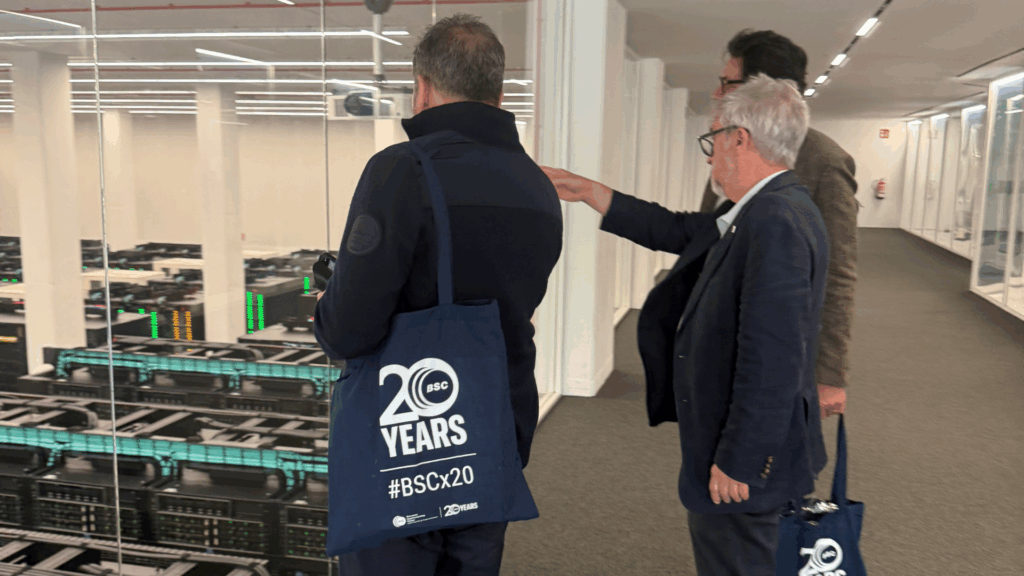
Colmena: international vision and commitment to health
Colmena Seguros, one of Latin America’s leading occupational risk management companies, reaffirms its commitment to innovation, occupational health and digital transformation with this visit. Its strategy seeks to integrate predictive tools and biomechanical assessment models that reduce accident rates, optimise health monitoring and anticipate the economic impact of absenteeism.
This event represents a milestone in the connection between science, technology and occupational health. It is also a firm step towards intelligent, real-time, data-driven prevention with a global vision. It also strengthens the international drive toward a shared safety culture in the workplace.