Draft reform of Spain’s Occupational Risk Prevention Law (Law 31/1995) in 2026: proposed changes, legislative status and how to prepare

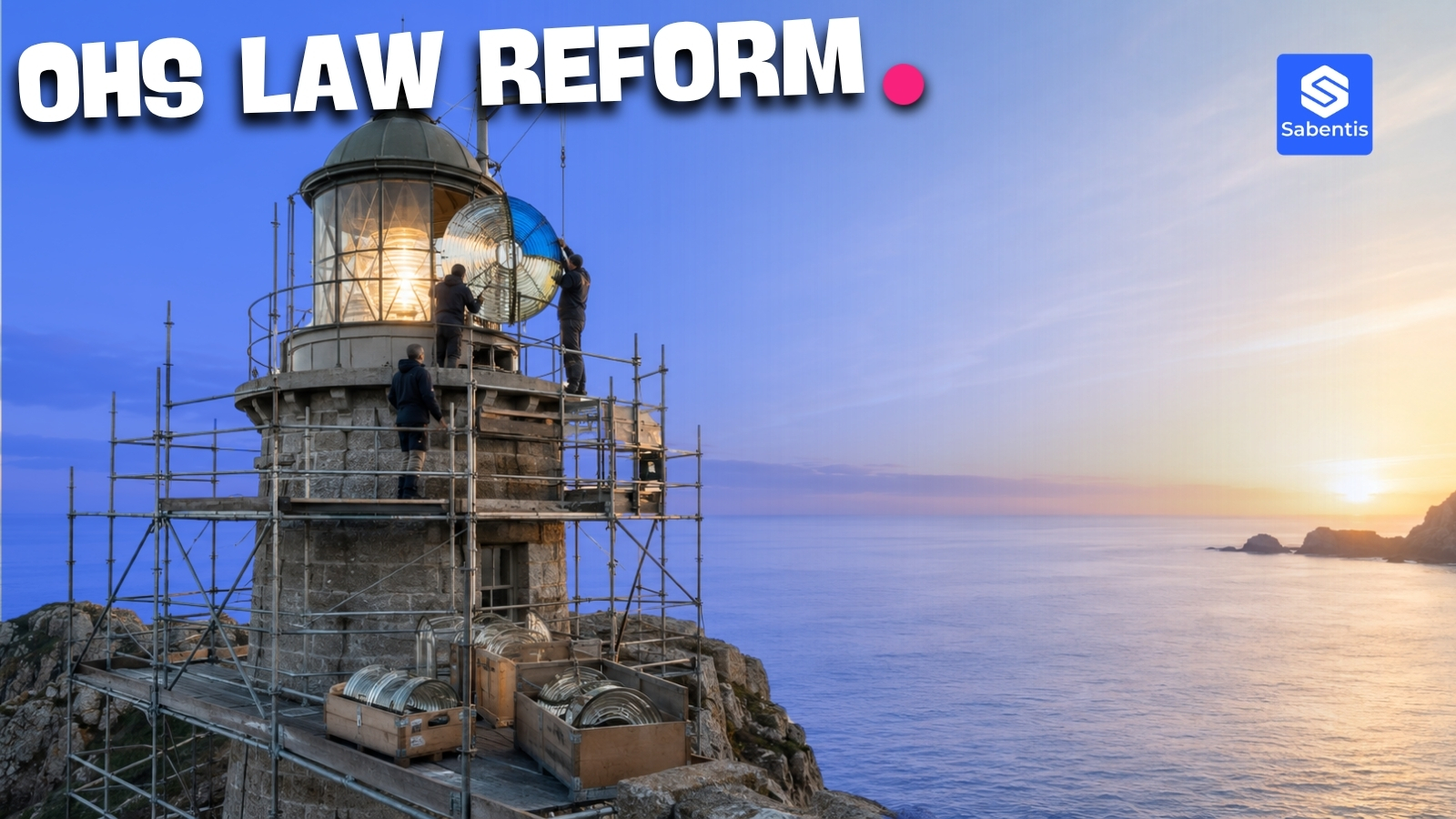
Last updated: 22 August 2026. Status: preliminary draft approved by the Council of Ministers on 28 April 2026 at the pre-legislative stage; it has not yet been submitted to Parliament. Public consultation ran from 17 March to 8 April 2026. The Economic and Social Council approved Opinion 11/2026 on 27 July 2026. No official date has been set for a second Council approval, submission to Parliament, publication or entry into force. Law 31/1995 remains the applicable law.
Spain’s new occupational risk prevention law is not a different law: it is the broadest reform of Law 31/1995 since it was passed three decades ago, and it is still a preliminary draft. The text proposes expressly referring to psychosocial risks, climate-related risks, a gender and age perspective, violence and harassment and the impact of artificial intelligence and algorithmic management, and revises parts of the preventive organisation that had not been touched for years: the on-site preventive resource, the in-house prevention service, the coordination of business activities and training.
This guide explains where the reform stands, what exactly changes, who is affected and what companies should do now, with a checklist by company size. It will be updated at each milestone of the procedure: Congress, Senate and publication in the Official State Gazette (BOE).
Where the reform stands (key dates and what remains in force)
Government-union agreement, public consultation and draft bill approved at first reading
- February 2026: the Ministry of Labour and Social Economy reached an agreement with the UGT and CCOO unions on the content of the reform, within the framework of 2026 as Spain’s Year of Occupational Safety and Health.
- 17 March to 8 April 2026: public consultation period for the draft bill amending Law 31/1995.
- 28 April 2026, World Day for Safety and Health at Work: the Council of Ministers approved the draft bill at first reading (Council of Ministers reference, in Spanish).
Parliamentary procedure and entry into force: Law 31/1995 remains the applicable law
After the first reading, the text must receive the mandatory opinions, including that of the Council of State, return to the Council of Ministers as a bill and pass through Congress and the Senate before publication in the BOE. The Economic and Social Council approved Opinion 11/2026 on 27 July 2026. No official date has been announced for final approval, publication or entry into force, and the text may change during the procedure, which is why this guide carries a last-updated date.
The preliminary draft has no legal effect unless and until it is enacted and published. Law 31/1995, the Prevention Services Regulation (Royal Decree 39/1997) and the rest of Spain’s occupational risk prevention rules remain fully in force, and the Labour and Social Security Inspectorate continues to enforce them. For an overview of the current framework, see our guide to occupational risk prevention regulations in Spain.
The key changes, one by one
Psychosocial risks and mental health: express reference and a regulation within one year
Psychosocial factors already fall within the general duty to assess occupational risks. The draft proposes making this duty express and provides for a regulation within one year of the future law entering into force, addressing, among other matters, healthy workplaces and prevention of suicidal behaviour. Its final methods and content have not yet been approved.
In practice this affects the risk assessment (identification of factors such as mental workload, pace of work, autonomy, social support or role conflict), the planning of measures and the evidence that must be available for the Labour Inspectorate. We cover this in more depth in our article on mental health at work.
Climate-related risks and adverse weather events in the risk assessment
The preliminary draft proposes expressly referring in Law 31/1995 to climate risks and adverse weather events (extreme heat, cold, storms, wildfires, floods) as content of the risk assessment. Royal Decree-Law 4/2023 already amended Royal Decree 486/1997 to regulate measures for outdoor workplaces and workplaces that cannot be enclosed, including adapting the working day under AEMET weather warnings. Companies with outdoor work, agriculture, construction, logistics or industry need action procedures and criteria for adapting or reducing the working day. See also working in extreme heat.
Gender and age perspective
Risk assessment and planning will have to take into account gender and age differences: distinct exposures, pregnancy and breastfeeding, ageing workforces and jobs historically designed around a single pattern. This does not mean separate assessments, but incorporating these variables into the existing ones and documenting how they were considered.
Violence, harassment and cyber-harassment as occupational risks
Workplace violence, harassment and cyber-harassment are expressly recognised as occupational risks to be assessed and prevented, in line with ILO Convention 190. This connects the anti-harassment protocols already required by equality legislation with the psychosocial assessment and with health surveillance, which until now were often managed separately.
Artificial intelligence and algorithmic management: what the reform requires and what the EU AI Act requires
The draft bill requires the risk assessment to consider the impact of artificial intelligence systems and algorithmic management on working conditions: intensified pace, monitoring, automated decisions. Regulation (EU) 2024/1689, the EU AI Act, classifies certain AI systems used for recruitment and for decisions, task allocation, monitoring or evaluation in employment as high-risk, subject to the exceptions in Article 6(3). High-risk systems require proportionate human-oversight and logging measures; the fundamental-rights impact assessment in Article 27 does not apply generally to every employer deploying AI. Human review and traceability must be proportionate to the risk and applicable law.
Health surveillance: mental health and the collective dimension
The preliminary draft provides that health surveillance should address physical and mental health and strengthen its individual and collective dimensions; it does not prescribe universal clinical tests. Collective surveillance is the aggregated, anonymous analysis of results to detect patterns by job, site or activity and feed them back into the risk assessment. Sabentis’s safety, health and well-being modules are designed precisely to close that loop between examination, collective result and preventive measure.
Practical in-person training, unless justified and evidenced reasons apply
Practical training on job risks must be delivered in person unless justified and duly evidenced reasons apply. The text sets no general ratio between in-person and online training. This affects training plans and evidence management: attendance, content, assessment and expiry.
On-site preventive resource with real presence and exclusive dedication
The preventive resource (recurso preventivo), a key figure on construction sites and in hazardous activities, will have to be physically present at the workplace and exclusively dedicated to its functions during the activity it supervises, rather than combining them with production tasks. For companies that appoint preventive resources on paper, this is one of the changes with the greatest operational and cost impact.
In-house prevention service: more than 300 workers (150 to 300 in Annex I activities)
The public-consultation draft proposes requiring an in-house prevention service in companies with more than 300 workers and in companies with between 150 and 300 workers carrying out the Annex I activities of Royal Decree 39/1997, the most hazardous ones. The current thresholds remain more than 500 workers and between 250 and 500 workers for Annex I activities. Companies in that range will need to plan an in-house or joint prevention service, with technical staff, specialities, facilities and the statutory audit.
Coordination of business activities: greater participation of self-employed workers
The preliminary draft proposes strengthening the participation of self-employed workers in the coordination of business activities (Article 24 of Law 31/1995 and Royal Decree 171/2004), Spain’s contractor coordination regime; the final scope will depend on the enacted law. For companies with contractors and subcontractors, it is advisable to plan for self-employed worker document management to become part of the coordination system.
Territorial prevention agent for SMEs and more time credit for prevention delegates
It also provides for regional territorial prevention agents for companies with fewer than ten workers, appointed by the most representative trade-union and employer organisations in each sector. The official summary does not support stating specific workplace-visit powers or a funding model. It also extends the time credit of prevention delegates to carry out their functions.
Timeline of obligations and expected deadlines
- 28 April 2026: draft bill approved at first reading.
- 27 July 2026: the Economic and Social Council approves Opinion 11/2026. No official dates have been announced for the remaining opinions or a second Council approval.
- Entry into force plus one year: deadline for the regulation on psychosocial risks.
- Any transitional regime will depend on the final enacted text; no new transitional regime is in force.
What companies should do now (checklist by company size)
SMEs: support from the territorial agent and the external prevention service
- Check with the external prevention service whether the risk assessment already covers psychosocial factors and climate-related risks.
- Document worker information and training with verifiable evidence, not only certificates.
- Prepare a basic protocol against violence and harassment, linked to the psychosocial assessment.
- Identify which jobs will require practical in-person training and plan it.
Companies with 150 to 500 workers: prepare the in-house or joint prevention service
- Check whether the activity is listed in Annex I of Royal Decree 39/1997 (150 to 300 workers in the draft).
- Size the technical resources, specialities and budget of the in-house or joint service.
- Plan the statutory audit and the document system that supports it.
- Review health surveillance to incorporate mental health and collective surveillance.
Companies with contractors: review coordination and self-employed worker documentation
- Inventory contractors, subcontractors and self-employed workers present at each site.
- Define which documentation will be required from self-employed workers and how site access will be controlled.
- Verify that appointed preventive resources have real presence and exclusive dedication.
- Integrate contractor coordination into the management system so the evidence is traceable.
How an OHS management system makes compliance easier
The reform adds fewer new substantive obligations than new evidence requirements: that the psychosocial assessment exists and is reviewed, that climate risks are assessed and procedures are triggered, that practical training is recorded, that the preventive resource was present, that self-employed workers were coordinated and that collective surveillance feeds back into the risk assessment.
OHS software such as Sabentis provides exactly that traceability: risk assessment by job with psychosocial and climate factors, planning of measures with owners and deadlines, psychosocial studies, integrated health surveillance, contractor and self-employed worker management, training with evidence and dashboards for management. With human review and traceability proportionate to the risk, and a record of who did what and when, which is what an inspection will ask to see.
Frequently asked questions
When does Spain’s new occupational risk prevention law enter into force?
There is no official date. The draft was approved on 28 April 2026, has not yet been submitted to Parliament and must complete the procedure. The public-consultation draft proposed 2 January 2027, but that date has no legal effect and may change. Until then Law 31/1995 applies in full.
Does the reform replace Law 31/1995 or amend it?
It amends it. It is an amending law that introduces new articles and changes others, but the structure, principles and most of the text of Law 31/1995 remain.
Will it be mandatory to assess psychosocial risks in every company?
It already is, as part of the general duty to assess risks. The draft proposes making it express and provides for a regulation within one year of the future law entering into force; its final methods and content have not yet been approved.
What changes for online OHS training?
Practical training on job risks must be in person unless justified and evidenced reasons apply. The text sets no general in-person-to-online ratio and does not confirm a general rule for theoretical training.
What is the territorial prevention agent and which companies does it affect?
It is a new regional figure for companies with fewer than ten workers, appointed by the most representative trade-union and employer organisations in each sector. Its specific powers and funding are not confirmed.
What changes for self-employed workers in the coordination of business activities?
The draft proposes strengthening their participation in the coordination of business activities; the specific cases and obligations will depend on the enacted law.
From how many workers will an in-house prevention service be mandatory?
Under the draft, in companies with more than 300 workers and in companies with between 150 and 300 workers carrying out Annex I activities of Royal Decree 39/1997. The current thresholds remain more than 500 and between 250 and 500 for Annex I.
How does the reform affect remote work and the right to disconnect?
Remote-work assessments must already address psychosocial, ergonomic, organisational and accessibility risks, as well as working-time distribution, availability, rest and disconnection, under Article 16 of Law 10/2021. The preliminary draft also addresses digital disconnection and the effects of digitalisation, but its final wording may change.
Official sources and links
- La Moncloa: Council of Ministers reference of 28 April 2026 (Spanish). Ministry of Labour and Social Economy: text of the preliminary draft on the public participation portal (Spanish).
- Law 31/1995 on Occupational Risk Prevention (consolidated text, BOE).
- Royal Decree 39/1997, Prevention Services Regulation (BOE).
- Royal Decree 171/2004 on coordination of business activities, Royal Decree-Law 4/2023 and Regulation (EU) 2024/1689 on artificial intelligence.