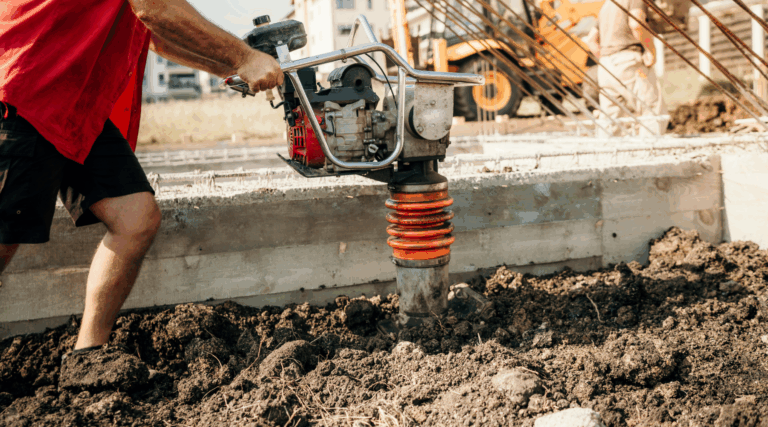
Why does the construction sector continue to lead in workplace accidents? 🏗️


Construction workplace accidents remain a persistent concern. Construction is one of the cornerstones of the Spanish economy, a major generator of employment and essential for urban and industrial development. However, it is also one of the sectors with the highest occupational risk.
The latest report from Spain’s National Institute for Safety and Health at Work (INSST) for 2023 confirms this once again. 64,486 work-related accidents resulting in sick leave were recorded in the construction sector, with an incidence rate of 5,517.3 per 100,000 workers, more than double the national average (2,640.2). See the official data from INSST.
This figure is even more striking considering that it represents over 11% of all accidents with leave across the country, making it one of the sectors with the highest relative and absolute accident rates.
Construction workplace accidents: a pattern that doesn’t break 🔁
Year after year, construction tops the accident charts. The causes? The same ones we already know:
- Falls (same level or from height)
- Being struck by objects or tools
- Overexertion due to manual handling of loads
- Contact with moving objects
In 2023, the sector also reported 121 fatal accidents, a figure that cannot be normalized. Behind every number is a story that could have been prevented.
Frequent worker turnover, ever-changing work environments and the involvement of multiple subcontractors all create a chain of risks that traditional tools often struggle to manage. Day-to-day pressure and tight deadlines mean prevention is often sidelined. Falls remain critical, which is why height safety deserves special attention.
The challenge: anticipate, don’t just react ⚙️
Prevention can no longer be limited to ticking legal boxes or filling out paperwork. True prevention is proactive, identifying risk before incidents occur. That’s where digital platforms like Sabentis have become indispensable allies. It requires moving toward proactive accident prevention strategies.
Sabentis is not just a control tool. It’s an intelligent system that adapts preventive measures to the pace of construction sites. Here’s how it works:
- ✅ Real-time subcontractor control: Track every external worker’s training, authorizations, PPE delivery and documentation
- ✅ Risk mapping by task and zone: Assign specific risks to each activity, automate permits and activate alerts when needed
- ✅ Automated alerts: Immediate notifications when evaluations expire, training is missing or medical restrictions are flagged
- ✅ Centralized documentation: From health and safety plans to follow-up reports, everything is traceable and inspection-ready
Sabentis also provides real-time indicators, detects anomalies before they escalate, and enables the creation of customized preventive action plans for every work zone. This level of foresight reshapes how safety is managed, bringing clarity and confidence to both HSE professionals and site managers. Find more insights on the Sabentis blog. This reflects how AI anticipates accidents.
The question is no longer whether we should digitize prevention, but how much longer we can afford not to. The construction sector needs tools that speak its language: fast, adaptable, visual and efficient.
Because on a worksite, there’s no room for error, and every day without a predictive system is an avoidable risk. Anticipation is no longer optional — it’s the new standard for building safely.