Coordinating concurrent employers: the risk that multiplies when companies share a site
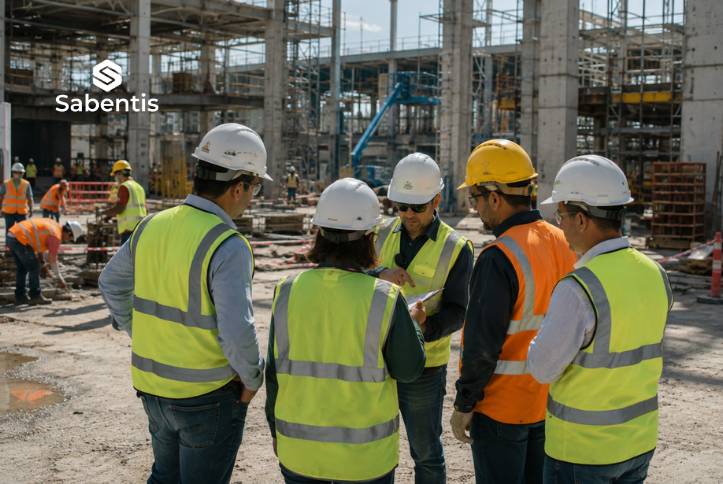
Walk into almost any active worksite in summer and the picture changes. The maintenance firm moves in during the production shutdown, a contractor arrives to cover the seasonal peak, a self-employed specialist fills a gap. Suddenly, workers from three, four or five different companies share the same space. And each of them quietly assumes that safety is somebody else’s job.
That assumption is where people get hurt.
Multiple employers operating in one workplace is not a paperwork detail. It is one of the settings where the most serious accidents happen, precisely because the hazard is created by one company and absorbed by another. Coordinating activities between concurrent employers exists to close that gap, and it is worth understanding before the gap sends you a bill.
What the law expects when companies share a site
Different countries codify this duty in their own way, and Spain offers a clear, well developed example. Article 24 of Act 31/1995 on the Prevention of Occupational Risks set the principle, and Royal Decree 171/2004 spelled it out. The idea is easy to state and hard to run: when workers from separate companies meet in one workplace, all of them have a duty to cooperate and to inform one another about the risks each one brings in.
Individual compliance is not enough. If the company working at height fails to warn the crew directly below, everyone doing their own paperwork correctly changes nothing. This logic runs through the whole framework of occupational risk prevention regulation in Spain, and it is the part many organisations still treat as a document exchange rather than what it actually is: shared risk management.
Host, principal and concurrent: who answers for what
The rules assign roles with real precision. The host employer runs the site and must inform and instruct the other companies about the hazards of the place and its emergency measures. The principal employer is the one contracting works or services that belong to its own core activity, and it carries a heavier duty: to actively check that the contractor complies. The concurrent employers, all of them, cooperate and exchange information about what they are bringing on site.
The own activity concept is the one that catches people out. When a company subcontracts tasks that sit at the heart of its business, its responsibility does not end when the contract is signed. It can be held jointly liable for breaches that happen on its premises during the contract. Put plainly: outsourcing the task does not outsource the responsibility. Reading it the other way is expensive, and not only in fines. The real cost of a workplace accident rarely fits on the invoice that passes between firms.
Summer, construction and the revolving door effect
Some sectors live this every morning. In construction, concurrence is the rule, not the exception: developer, main contractor, structural and MEP subcontractors, finishing trades, specialist freelancers. That is why digitalising prevention in construction stops being optional the moment a different set of people enters and leaves the site every week.
Summer raises the pressure. Teams rotate, reinforcements arrive with little experience of that specific site, and heat rewrites the rules. We already looked at how climate change forces construction companies to rethink prevention, and coordination is exactly the point where that heat either becomes concrete instructions for everyone on site, or does not.
Do you know, right now, how many companies are working on your site and what risks each of them has declared?
Why paper cannot carry real coordination
With two companies and a spreadsheet you can just about survive. With six, you cannot. Real coordination means every company’s risk assessment, the host’s instructions, training records and the agreed coordination measures are available, current and reachable by whoever needs them at the moment they need them. On paper, that gets lost. And what you cannot demonstrate to an inspector or a court simply did not happen.
This is where traceability earns its place. Working with EHS software that delivers traceability means knowing who handed over which document, when a hazard was communicated and whether the contractor acknowledged it. Coordination also lands in something as concrete as the workplace emergency plan: if five companies share your site, all of them must know the evacuation routes and who to alert, not just yours.
From obligation to control
Coordinating multiple employers usually feels like a burden. Fair enough, because done by hand it is one. It changes entirely when you stop chasing documents and start holding a live picture of who is on your site, what risks they declare and what is still open. That is when the obligation turns into control, and control is what stops someone else’s shortcut from becoming your accident.
If your organisation regularly shares sites with contractors, it is worth seeing how all of this works without loose paperwork or endless email chains. You can request a Sabentis demo and test it against your own coordination flows.
In the end, the question is not whether you will coordinate. You will, one way or another. The question is whether you want to find out about the risk before, or after, someone discovers it the hard way.