Heat at work in Spain: maximum temperatures, Royal Decree-Law 4/2023 obligations and what to do when AEMET issues a warning

Every summer the same question comes back: what is the maximum temperature for working? The short answer is that Spanish regulations do not set an exact degree above which outdoor work is prohibited, but they do require heat stress to be assessed and conditions to be adapted and, since Royal Decree-Law 4/2023, where AEMET or, where applicable, the corresponding regional meteorological authority issues an orange or red warning and the existing preventive measures do not guarantee protection, working conditions must be adapted, including reducing or changing scheduled working hours. And the Labour Inspectorate enforces it with a dedicated summer plan.
Maximum working temperatures: what the rules say
For enclosed workplaces, Annex III to Royal Decree 486/1997 generally requires temperatures of 17 to 27 °C for sedentary work and 14 to 25 °C for light work; classification depends on the actual activity, not the type of building. Outside those ranges the company must take action. Outdoors there is no legal maximum temperature; the risk assessment must consider heat stress based on temperature, humidity, solar radiation, the physical demands of the task and the clothing and protective equipment worn. WBGT or similar indices are the usual technical tool.
What Royal Decree-Law 4/2023 requires under an AEMET warning
Royal Decree-Law 4/2023 inserted a sole additional provision into Royal Decree 486/1997 for outdoor work and for workplaces that cannot be enclosed. Where AEMET or, where applicable, the corresponding regional meteorological authority issues an orange or red warning for adverse weather and the existing preventive measures do not guarantee protection, working conditions must be adapted, including reducing or changing scheduled working hours. The warning acts as a trigger: the company must have decided what to do before it arrives.
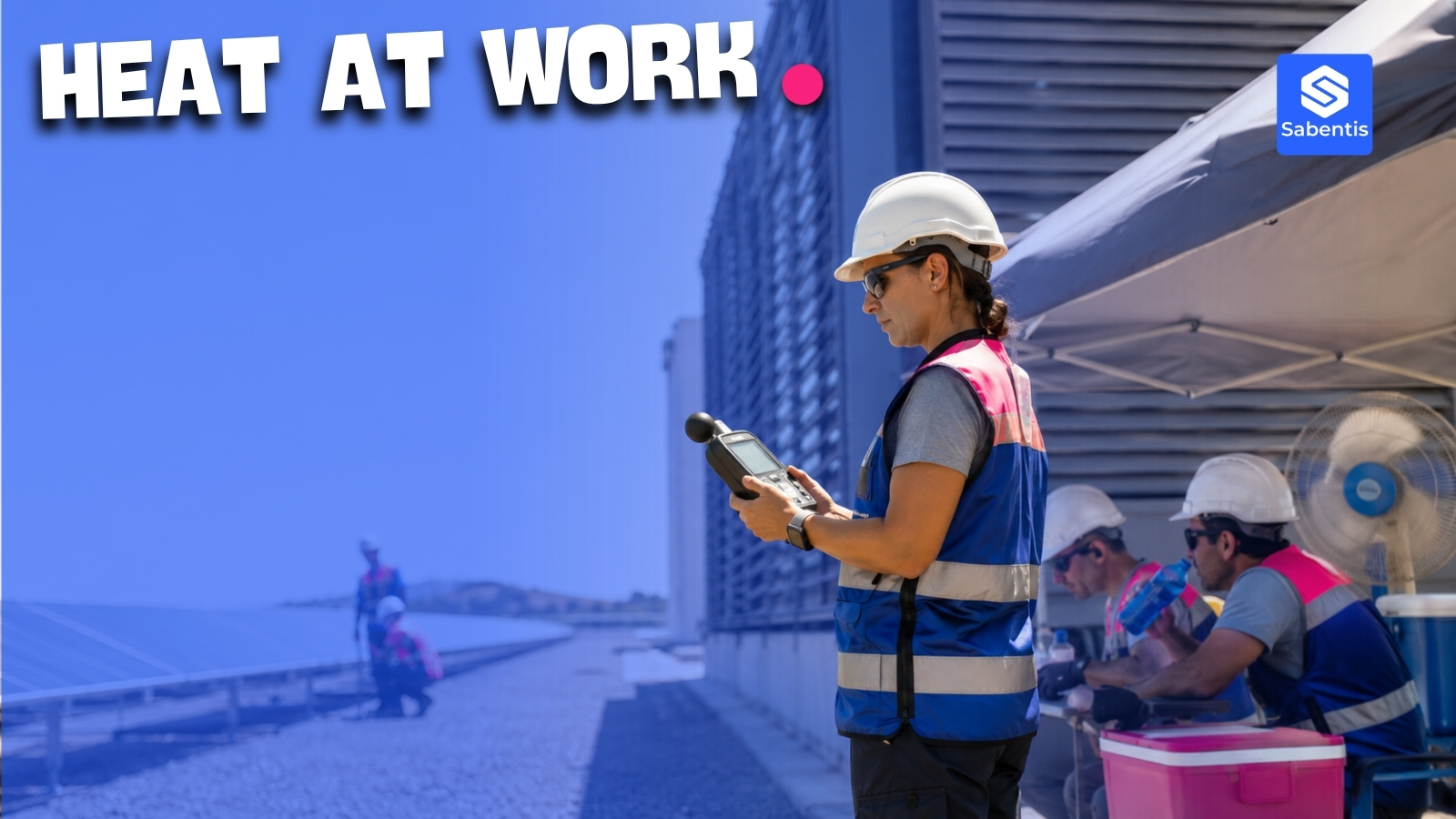
In practice, the usual measures are: reorganising tasks to the cooler hours, frequent breaks in shaded or air-conditioned areas, guaranteed hydration, rotation in the most physically demanding tasks, sun protection and suitable PPE, monitoring for heat stroke symptoms and an action protocol.
The Labour Inspectorate’s 2026 summer plan
The Labour and Social Security Inspectorate repeats in 2026 its summer plan to check working conditions in the heat. According to the official release from the Spanish Government, 113,916 notices were sent in 2026 to agriculture and construction companies reminding them of their obligations. Between June and September 2025 the Inspectorate carried out 10,784 actions, identified 291 infringements and imposed 1,559,949 euros in penalties.
Heat stroke: symptoms and response
Heat stroke at work is a medical emergency: high body temperature, hot and dry skin or heavy sweating, confusion, dizziness, nausea, loss of consciousness. The immediate response is to stop the activity, move the person to a cool place, cool them down (water, cloths, ventilation) and call the emergency services. The response must be integrated into the employer’s emergency measures, with informed and trained personnel; documenting it in writing and keeping it accessible at the workplace is good practice.
Climate risks reach Spain’s Occupational Risk Prevention Law
The draft reform of the law approved on 28 April 2026 proposes expressly referring to climate risks and adverse weather events in risk assessments. Unless and until it is enacted, Law 31/1995 and Royal Decree 486/1997 remain applicable, including the sole additional provision inserted by Royal Decree-Law 4/2023, which already require relevant heat risks to be assessed. Heat stops being a seasonal exception and becomes a risk that is assessed, planned and documented all year round. Read more in climate change and OHS in construction and in our guide to the reform of Spain’s Occupational Risk Prevention Law.
Penalties
Failure to assess risks or adopt preventive measures may constitute a serious infringement under Article 12 of the LISOS or, in the specific cases covered by Article 13, a very serious infringement. Where a serious and imminent risk exists, the Inspectorate may order immediate stoppage under Article 44 of Law 31/1995.
Checklist for the company
- Risk assessment covering heat stress by job and task, indoors and outdoors.
- Action procedure for orange and red warnings from AEMET or the regional authority, with owners.
- Water, shade, breaks and rotation planned and recorded.
- Training and information for the workforce on heat stroke and first aid.
- PPE and sun protection suited to the task.
- A record of the measures adopted on each warning day, as evidence for the Inspectorate.
How Sabentis helps
With Sabentis the company includes heat stress in the risk assessment, plans measures by site and activates them when the warning arrives, records breaks, hydration and training, and keeps the evidence of each working day. We develop this in working in extreme heat.